
Patrón Built the Modern Tequila Market.
There’s been a weird trend lately - hating Patrón. Another “Patrón was all marketing” article crawls out of LinkedIn or some fake-business-guru page written by a guy who thinks no one will notice his spray painted hairline.
The newest hit piece floating around tries to frame Patrón as some hollow luxury brand built on image instead of substance. That’s cute. Because it completely ignores what tequila looked like before Patrón showed up.
Once upon a time, tequila in America was mostly viewed as a punishment. Cheap mixto tequila, under $10 a bottle cheap. Salt, lime, bad breath, waking up hurting from the ass kicking you got when you pissed your pants. The category had almost zero respect outside Mexico. Whiskey was cool. Cognac had prestige. Fine wine had sophistication. Tequila had college freshmen and high divorce rates.
Then Patrón came in and changed the game.
Not by “tricking” people. By forcing consumers to rethink what tequila could be.
“They Didn’t Even Have Their Own Distillery”
This argument gets repeated constantly by people who don’t understand how getting into spirits production works.
Yes, early Patrón production involved partnership work with Siete Leguas. That is not some dark secret. It’s proof they wanted to work with a respected producer to put out a top notch product and NOT some industrial garbage in a figure 8 bottle.
Half the spirits world operates through partnerships, sourcing agreements, contract distillation, blending houses, or collaborative production. Scotch does it. Bourbon does it. Champagne houses do it. Even some “craft” brands people worship today started with sourced liquid. Proof of concept before you build the distillery, a time tested strategy.
“It Was Just Marketing”
Patrón helped introduce millions of people to 100% agave tequila at a time when most Americans had no idea what that meant. And they understood something the tequila world didn’t yet understand: presentation matters.
- The hand-numbered bottles mattered.
- The cork mattered.
- The packaging mattered.
- The fact that people kept the bottle after finishing it mattered.
And let’s be honest — a lot of the same people mocking Patrón today are drinking tequila from brands built entirely on celebrity ownership and TikTok marketing. Suddenly branding is evil only when Patrón did it first?
Interesting timing.
The “Authenticity” Conversation Got Weird
Articles try to paint brands like Fortaleza or Don Julio as somehow more “real” than Patrón. (Don Julio gets sued)
You can appreciate smaller-production tequila without pretending Patrón is trash. Both things can exist at the same time.
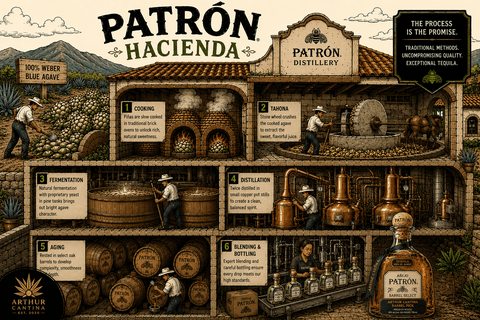
Patrón still uses traditional methods:
- Tahona stone crushing in part of production
- Brick ovens
- Copper pot distillation
- Careful agave sourcing
- Small-batch blending standards
The internet has created this bizarre culture where people think if a tequila becomes popular, it automatically becomes bad. Apparently the goal is to stay obscure forever so seven dudes on Reddit can argue about MSRP while the company goes bankrupt.
Patrón succeeded because normal consumers actually enjoyed drinking it.
The Additive-Free Debate
Here’s where things get especially dishonest.
Patrón has long leaned into being additive free, and unlike many brands, they were transparent about production methods before it became fashionable marketing language.
The regulatory situation around “additive-free” labeling is messy industry politics, not proof Patrón was lying. The CRT’s stance affected a huge range of brands and producers — not just Patrón. CRT said they allow a small percentage of additives in tequila and because Patrón boasted about being additive free on their label, the CRT did not like this and messed with their ability to export. Maybe the CRT should not allow additives to be accepted at ALL but that’s a blog post for another time.
And by the way, plenty of people throwing stones at Patrón are happily drinking celebrity tequila sweetened to be palatable.
Hey did you know we went to Mexico to buy our own barrel of Patron? Check it out
Did Patrón Lose Some Market Share?
Sure.
That happens when you create an entire category and dozens of competitors rush in behind you. Patrón walked so modern ultra-premium tequila could exist.
Without Patrón:
- There is no luxury tequila section in most liquor stores.
- Restaurants don’t build serious tequila programs.
- High-end tequila cocktails don’t explode nationally.
- Consumers don’t learn to sip tequila neat.
- Half the brands attacking them today probably never get funded.
Patrón didn’t “fail.” They became foundational. Much like how Red Bull dominated the category it created, new brands come in, take market share, people realize the new brands suck and go back to the tried and true.
The Real Lesson
The funniest part, most of these videos and articles accidentally prove why Patrón was brilliant.
They say Patrón “created a category.”
Exactly.
That’s one of the hardest things a company can do in any industry.
Patrón took tequila from frat-house chaos to pop culture S-tier status. They made consumers willing to spend real money on tequila. They opened the door for the entire premium tequila boom — including the brands critics now use against them.
The tequila world today is better because Patrón kicked in the door first.
Comments (0)
There are no comments for this article. Be the first one to leave a message!